RCT vs Crossover Design bersama contoh
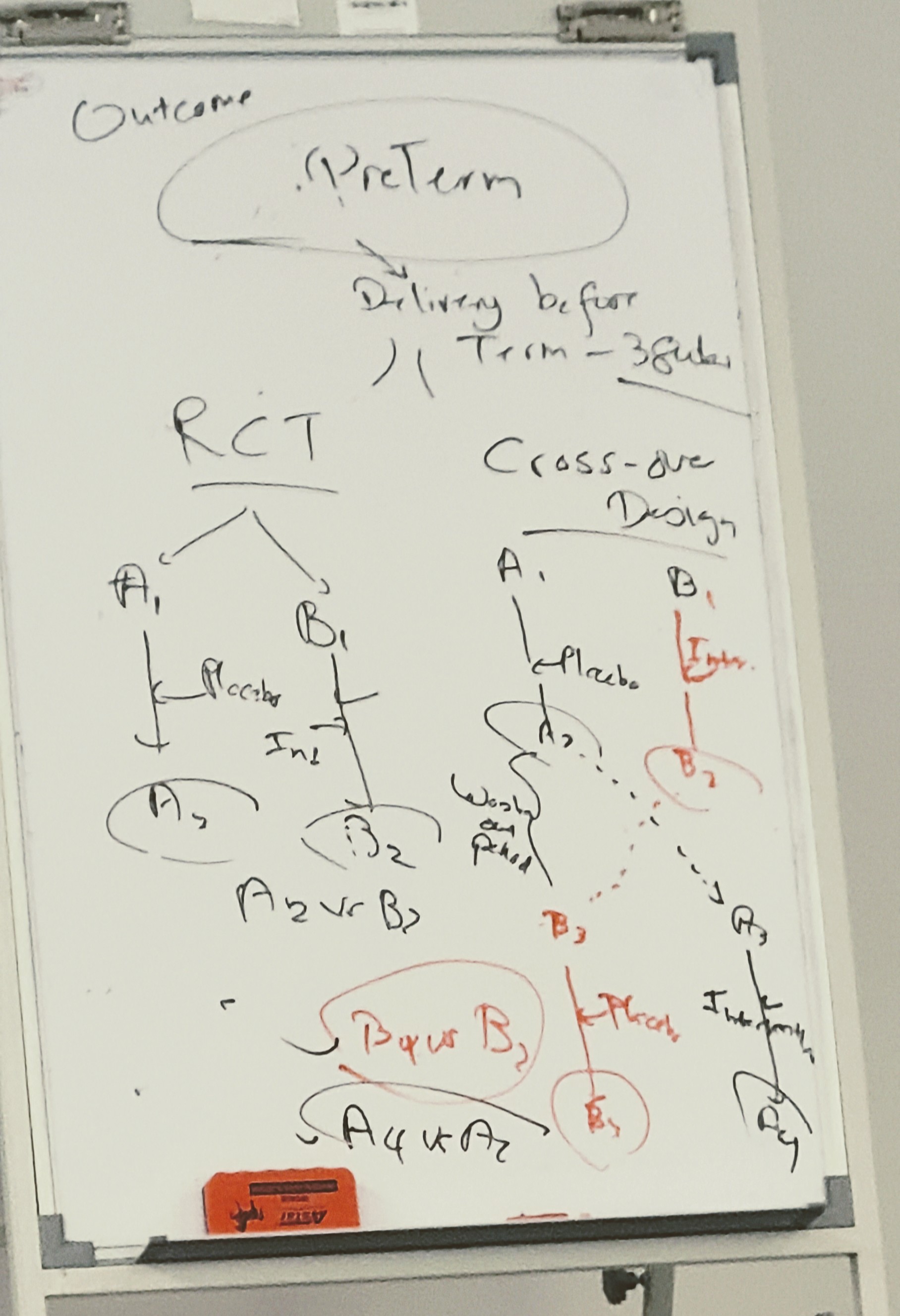
Belajar ni dari Prof Adinegara in November 2023.
…
Crossover Design;
In a study comparing Drug A and Drug B for treating headaches:
->Group 1 might receive Drug A first, then switch to Drug B after a washout period.
->Group 2 might receive Drug B first, then switch to Drug A after a washout period.
Fewer participants are required compared to parallel designs because each participant acts as their own control.
Reduces inter-individual variability.
….
I ask Chatgpt to design an imaginary study for an RCT on Habbatus Sauda.
….
Study Title:
“The Effectiveness of Habbatus Sauda (Black Seed) Supplementation on Improving Immunity in Adults: A Randomized Controlled Trial”
Study Design:
Type: Randomized Controlled Trial (RCT)
Duration: 12 weeks
Sample Size: 100 participants
Population: Adults aged 20–40 years with no known chronic illnesses, randomly assigned into two groups.
Objective:
To evaluate the impact of Habbatus Sauda supplementation on immunity markers, including white blood cell count and inflammatory biomarkers (e.g., CRP levels).
Hypothesis:
Participants receiving Habbatus Sauda supplementation will show improved immunity markers compared to the placebo group.
Methodology:
- Recruitment and Screening:
Recruit 100 participants from a local community through advertisements.
Screen participants for inclusion and exclusion criteria:
Inclusion: Healthy adults, not currently taking immune-boosting supplements.
Exclusion: Pregnant or breastfeeding women, those with allergies to black seed, or those on immunosuppressive drugs.
- Randomization:
Randomly assign participants into two groups (1:1 ratio):
Intervention Group (n=50): Receives Habbatus Sauda capsules (500 mg twice daily).
Control Group (n=50): Receives placebo capsules (identical appearance, no active ingredient).
- Blinding:
Double-blind: Neither participants nor researchers know who receives the active supplement or placebo.
- Baseline Assessment:
Measure baseline immunity markers:
White blood cell (WBC) count.
C-reactive protein (CRP).
Self-reported general health questionnaires.
- Intervention:
Participants take their assigned capsules daily for 12 weeks.
- Monitoring:
Weekly check-ins via phone or in-person to monitor compliance and adverse effects.
Participants maintain a diary of any symptoms or health changes.
- Follow-Up and Final Assessment:
After 12 weeks, repeat the blood tests and questionnaires.
Outcome Measures:
Primary Outcome:
Change in immunity markers (e.g., WBC count, CRP levels).
Secondary Outcomes:
Incidence of colds or other minor illnesses during the study period.
Self-reported energy levels and overall well-being.
Data Analysis:
Use paired t-tests or ANOVA to compare changes in immunity markers between the two groups. ? ( ? I wonder this is right?comparing means between the two groups and what would it mean? )
Adjust for confounders like age, gender, and baseline health status.
Ethics and Approval:
Obtain ethical approval from a local Institutional Review Board (IRB).
Informed consent obtained from all participants.
Expected Results:
It is hypothesized that the Habbatus Sauda group will exhibit a statistically significant improvement in immunity markers compared to the placebo group, indicating its potential as an immune-boosting supplement.
……
(by this at least you can push into the pathological group? .. like the CKD group, CVA, HF group.) still this is just an imaginary study.
saje la.
vs a Crossover design trial
…
Study Title:
“The Effects of Habbatus Sauda (Black Seed) Supplementation on Inflammatory Markers: A Crossover Design Trial”
Study Design:
Type: Randomized, Double-Blind, Placebo-Controlled Crossover Trial
Duration: 16 weeks (8 weeks per treatment phase with a 4-week washout period)
Sample Size: 50 participants (each participant acts as their own control)
Population: Healthy adults aged 20–50 years.
Objective:
To investigate whether Habbatus Sauda supplementation reduces inflammatory markers (e.g., C-reactive protein (CRP)) compared to a placebo. Itu je lah yang boleh buat!
Hypothesis:
Participants will experience a significant reduction in inflammatory markers during the Habbatus Sauda phase compared to the placebo phase.
Methodology:
- Recruitment and Screening:
Recruit 50 participants from the community.
Inclusion Criteria: Healthy adults with elevated but non-pathological CRP levels (>1 mg/L).
Exclusion Criteria: Pregnant or breastfeeding women, known allergies to black seed, or those using anti-inflammatory medications.
- Randomization:
Participants are randomized into two sequences:
(Group 1 )Sequence 1: Habbatus Sauda first, placebo second.
(Group 2)Sequence 2: Placebo first, Habbatus Sauda second.
- Intervention Phases:
Phase 1 (8 weeks): same duration
Group 1 receives Habbatus Sauda (500 mg twice daily).
Group 2 receives placebo (identical capsules).
Washout Period (4 weeks):
No supplements to ensure the effects of the first treatment dissipate.
Phase 2 (8 weeks): same duration
Groups switch treatments.
- Blinding:
Both participants and researchers are blinded to the treatment allocation during the study.
- Baseline and Follow-Up Assessments:
Baseline (Week 0): Collect blood samples for CRP levels, white blood cell count, and general health questionnaires.
Week 8, 12 (end of washout), and 16: Repeat assessments after each phase and washout. I wonder 8 weeks can produce a significant result.
Outcome Measures:
Primary Outcome:
Changes in CRP levels between the Habbatus Sauda and placebo phases.
Secondary Outcomes:
Changes in other inflammatory markers (e.g., IL-6).
Self-reported changes in general well-being and energy levels.
Statistical Analysis:
Use paired t-tests to compare outcomes between the two treatment phases within individuals.
Mixed-effects models ( Ini apa?– maybe can be eliminated in the homogeneity of the data) to account for treatment sequence and potential carryover effects.
Ethics and Approval:
Ethical approval will be obtained from the relevant Institutional Review Board (IRB).
Written informed consent from all participants.
Expected Results:
Participants are expected to show a significant reduction in CRP and other inflammatory markers during the Habbatus Sauda phase compared to the placebo phase.
No significant carryover effects due to the washout period.
…
I wonder. Saje je lah, nak memahami study design RCT vs Crossover Designs. Dalam Crossover design ni, participant in the studies akan compare kepada diri sendiri,( the keyword is within subject comparison) jadi intervariability of the study in within the compared participants.
Satu lagi, crossover studies in bagus untuk short term effects yang ada reversibility. Permanent effect tak boleh ah nak buat crossover study.





 DrMKZ
DrMKZ 
Leave a comment