Eugenics
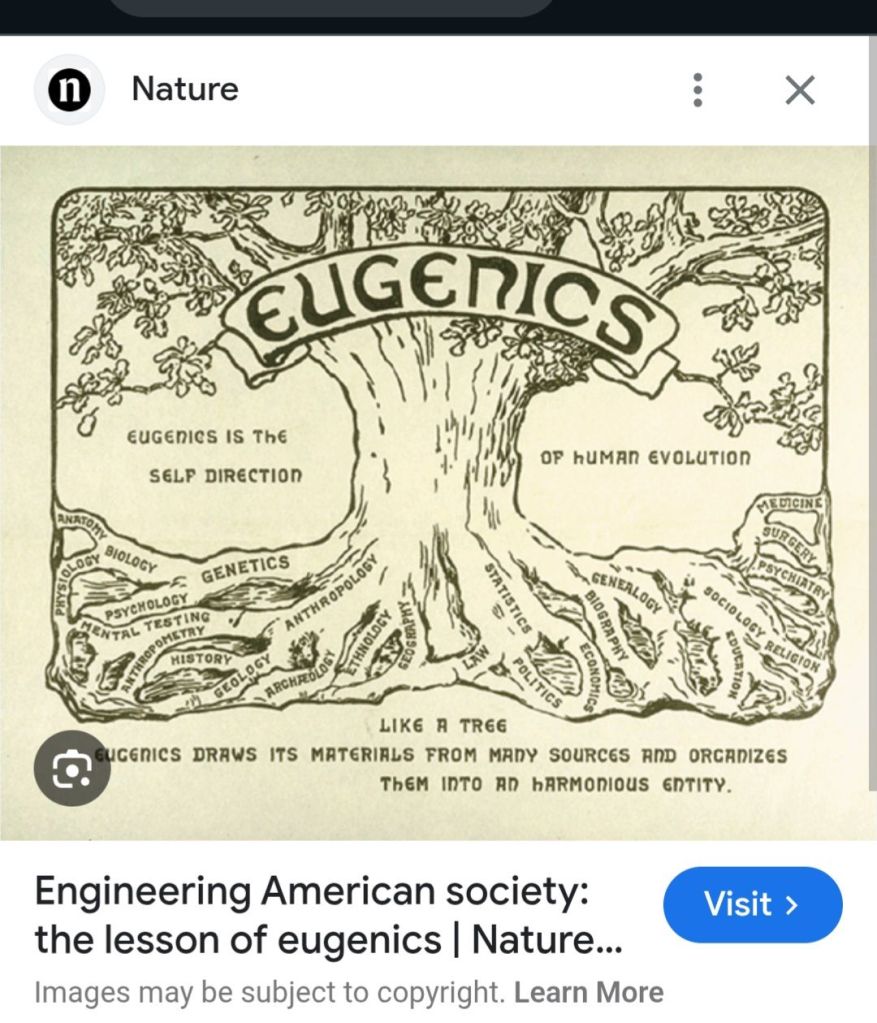
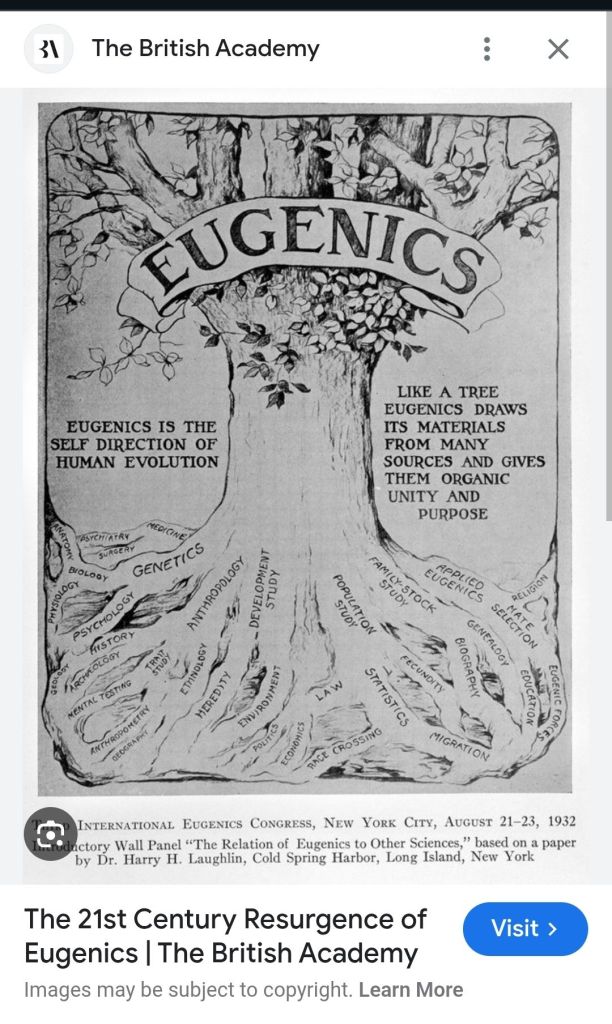
The American eugenics project refers to a movement in the late 19th and early 20th centuries in the United States that aimed to “improve” the human population by controlling reproduction—encouraging those with traits deemed “desirable” to reproduce and preventing those considered “unfit” from doing so.
Here’s a summary of the key aspects:
—
.. Origins and Philosophy
Rooted in: The ideas of Francis Galton (a cousin of Charles Darwin), who coined the term eugenics in the late 1800s.
Goal: To apply principles of heredity and “selective breeding” to humans.
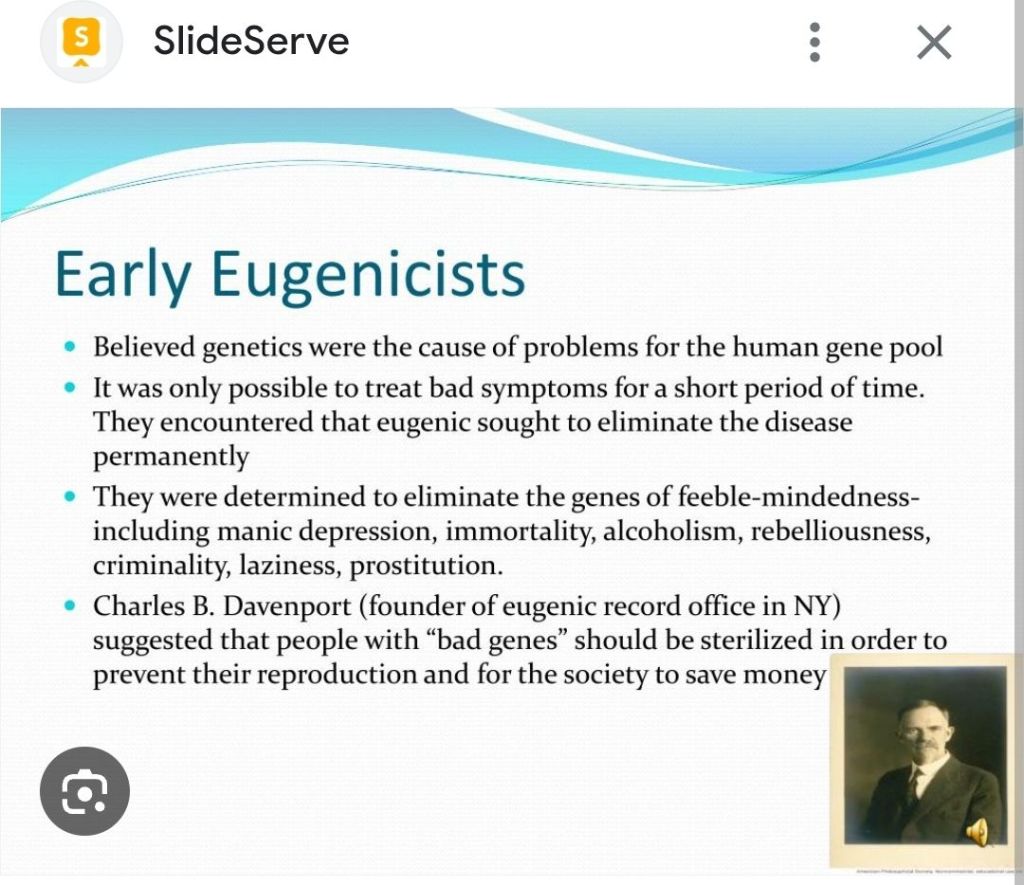
Beliefs: Intelligence, morality, and criminality were seen as hereditary traits; social problems (like poverty or mental illness) were blamed on “bad genes.”
—
..The American Movement (circa 1900–1940s)
Major figures:
Charles Davenport – founded the Eugenics Record Office (ERO) at Cold Spring Harbor in 1910.
Harry H. Laughlin – led policy efforts, drafting model sterilization laws.
Funded by: Wealthy elites and major institutions (e.g. Carnegie Institution, Rockefeller Foundation, Harriman family).
—
⚖️ Policies and Actions
1. Forced Sterilization Laws
Began with Indiana (1907) – the first state law allowing sterilization of the “feebleminded” and criminals.
By the 1930s, over 30 states had similar laws.
Around 60,000+ Americans were forcibly sterilized—mostly poor, disabled, mentally ill, or people of color.
2. Immigration Restrictions
The Immigration Act of 1924 (Johnson-Reed Act) was heavily influenced by eugenic arguments to limit “undesirable” immigrants (especially from Southern and Eastern Europe).
3. Marriage and Segregation Laws
Many states had laws preventing marriage between races or between those deemed “unfit.”
—
⚖️ Legal Endorsement
Buck v. Bell (1927) – the U.S. Supreme Court upheld Virginia’s sterilization law.
Justice Oliver Wendell Holmes Jr. wrote the infamous line:
> “Three generations of imbeciles are enough.”
This decision has never been formally overturned.
—
Impact and Decline
Nazi Germany admired and borrowed from American eugenics policies.
U.S. sterilization laws and racial theories helped inspire Nazi racial hygiene programs.
After World War II and the exposure of Nazi atrocities, the American eugenics movement lost credibility.
It evolved into fields like genetic counseling and population control, but with more ethical and scientific focus.
—
Legacy
Victims of forced sterilization have received belated recognition and compensation in a few states (e.g., North Carolina, Virginia).
Modern debates about genetic engineering, prenatal screening, and CRISPR sometimes echo eugenic concerns.





 DrMKZ
DrMKZ 