Falsafah
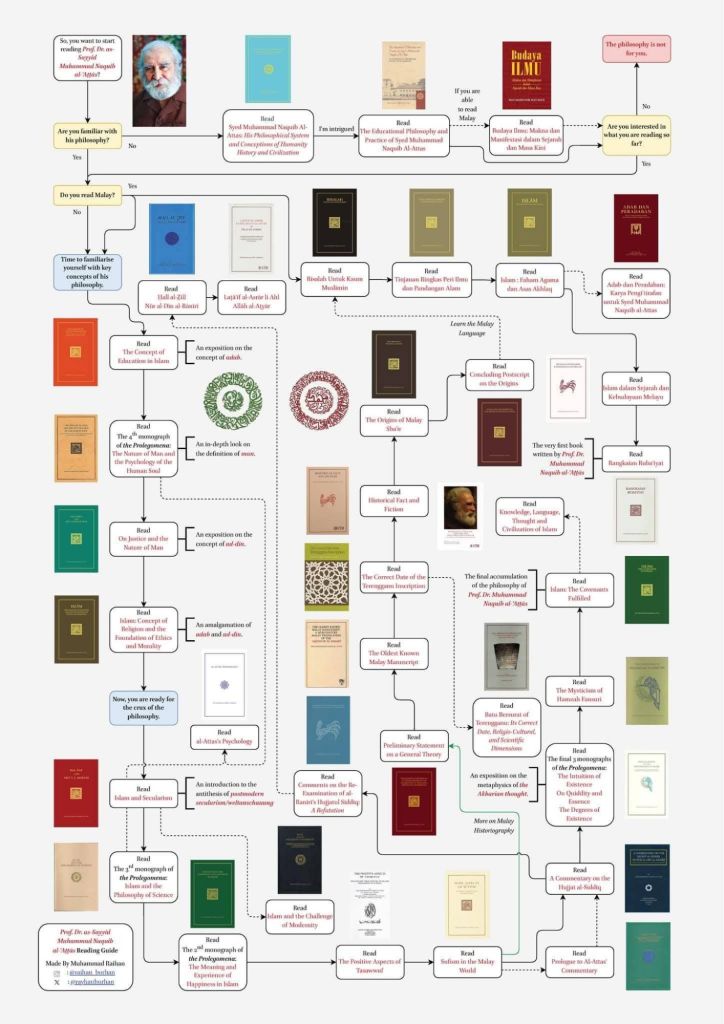

Innalillah wainnailaihi rajiun.
Kita dengan Islam, Singapore: Pustaka Nasional, 1979 [in Malay].
Sosiologi Korupsi, Jakarta: LP3ES (2nd ed., 1982) [in Indonesian].
The Problem of Corruption, Singapore: Times Books International, 1986.
Corruption: Its Nature, Causes and Functions, Aldershot: Avebury, 1990.
Articles Journals
“Objectivity and the Writing of History”, Islamic Review (Woking, United Kingdom) XLII,
1, 1954.
“Reconstruction of Malaysian History”, Revue du Sud-est Asiatique (Institute of Sociology,
Brussels: no. 3, 1962.
“The Weber Thesis and Southeast Asia”, Archives de Sociologie des Religions (Paris) no.
15, 1963.
“Theoretical Aspects of Southeast Asian History”, Asian Studies (Manila) 2, 2, 1964.
“Archaeology, History and the Social Sciences in Southeast Asia”, Federation Museums
Journal (Kuala Lumpur) IX (new series), 1964.
“Collective Representations and Economic Development”, Kajian Ekonomi Malaysia
(Kuala Lumpur) 2, l, 1965.
“Feudalism in Malaysian Society”, Civilization (Brussels) XVIII, no. 4, 1968.
“The Grading of Occupational Prestige Amongst the Malays in Malaysia”, Journal
of the Malaysian Branch of the Royal Asiatic Society (Kuala Lumpur), XLI, pt. 1, 1968.
“Some Comments on Islam and Social Change in Malaysia”, International Yearbook
for the Sociology of Religion (Germany) 5, 1969.
“Religion and Modernization in Southeast Asia”, Archives Européens de Sociologie (Paris)
XI, 1970.
“The Captive Mind in Development Studies”, International Social Science Journal
(UNESCO, Paris). XXIV, 1, 1972 [in English & French].
“The Rukunegara and the Return of Democracy to Malaysia”, Pac
Articles Journals
“Objectivity and the Writing of History”, Islamic Review (Woking, United Kingdom) XLII,
1, 1954.
“Reconstruction of Malaysian History”, Revue du Sud-est Asiatique (Institute of Sociology,
Brussels: no. 3, 1962.
“The Weber Thesis and Southeast Asia”, Archives de Sociologie des Religions (Paris) no.
15, 1963.
“Theoretical Aspects of Southeast Asian History”, Asian Studies (Manila) 2, 2, 1964.
“Archaeology, History and the Social Sciences in Southeast Asia”, Federation Museums
Journal (Kuala Lumpur) IX (new series), 1964.
“Collective Representations and Economic Development”, Kajian Ekonomi Malaysia
(Kuala Lumpur) 2, l, 1965.
“Feudalism in Malaysian Society”, Civilization (Brussels) XVIII, no. 4, 1968.
“The Grading of Occupational Prestige Amongst the Malays in Malaysia”, Journal
of the Malaysian Branch of the Royal Asiatic Society (Kuala Lumpur), XLI, pt. 1, 1968.
“Some Comments on Islam and Social Change in Malaysia”, International Yearbook
for the Sociology of Religion (Germany) 5, 1969.
“Religion and Modernization in Southeast Asia”, Archives Européens de Sociologie (Paris)
XI, 1970.
“The Captive Mind in Development Studies”, International Social Science Journal
(UNESCO, Paris). XXIV, 1, 1972 [in English & French].
“The Rukunegara and the Return of Democracy to Malaysia”, Pacific Community
(Tokyo) 2, 4, 1971.
“The Politics of Coalition in Malaysia”, Current History (Philadelphia) 63, 376, 1972
“The Intellectuals and Nationbuilding”, Cultures (UNESCO, Paris) 1, 4, 1974.
“The Captive Mind and Creative Development”, International Social Science Journal
(UNESCO, Paris) XXVI, 4, 1974 [in English & French].
“Islam e Socialismo”, Ulisse 14, 83, 1977 [in Italian].
“Problems of Defining Religion”, International Social Science Journal (UNESCO, Paris)
29, 2, 1977 [in English & French].
“Towards an Asian Social Science Tradition”, New Quest (New Delhi) 17, September–
October, 1979.
“Intellectual Imperialism: Definition, Traits and Problems”, Southeast Asian Journal of
Social Science 28, l, 2000.
“The Intellectuals”, Suara Merdeka 10, 2, Dec 1959.
“Notes on Source Materials for a Survey of Social Trends in Malaysia and Singapore”,
Singapore Libraries l, 1971.
“Controversy on Raffles”, Suara Universiti, 3, l, 1972.
“Should Asia Continue to Plunder Itself ?,” Trends: Journal of the National Youth Leadership
Training Institute, (Singapore) no. 15, 1978.
“Science and Change”, Singapore Scientist 7, 2, 1981.
“A Note on the Unity of Southeast Asian History”, Commentary (Singapore), 5, 2–3,
1982.
Chapters in Books
“The Islamic Concept of Religion and Social Ideal”, in S.T. Alisjahbana, X.S.
Thani Nayagam, Wang Gung Wu, eds., The Cultural Problems of Malaysia in the
Context of Southeast Asia, Kuala Lumpur: Malaysian Society of Orientalists, 1965.
“Identification, Cohesion and Isolation”, in Youth and Urbanization in Asia, Singapore:
World Assembly of Youth, 1967.
“India and the Intellectual Awakening of Asia”, in B. Sarkar, ed., India and Southeast
Asia, New Delhi: Indian Council for Cultural Relations, 1968.
“The Captive Mind in Development Planning”, in K.B. Madhava, ed., International
Development, 1969, Washington, D.C.: Society for International Development New
York: Oceana Publications, 1969.
“Modernization and National Consciousness”, in Ooi Jin-Bee & Chian Hai Ding,
eds., Modern Singapore, Singapore: University of Singapore Press, 1969.
“Obstacles to Development”, in Yong Mun Cheong, ed., Trends in Malaysia II,
Singapore: Institute of Southeast Asian Studies, 1974.
“Sociology of Corruption”, in M. Nishihara, ed., Tonan Ajia No Seiji-Teki Fuhai (Political
Corruption in Southeast Asia), Tokyo: Sobunsha, 1976 [ Japanese translation of an
excerpt from The Sociology of Corruption].
“Erring Modernization: The Dilemma of Developing Societies”, in Y. Atal, ed.,
Asian Re-Thinking on Development, New Delhi: Abhinab Publications, 1977.
“Tesis Weber dan Asia Tenggara”, in Taufik Abdullah, ed., Agama, Etos Kerja dan
Perkembangan Ekonomi, Jakarta: LP3ES, 1979.
“Cultural Impediments to Scientific Thinking”, in Rolf E. Vente & Peter S. Chen,
eds. Culture and Industrialization, Baden-Baden: Nomos Verlagsgesellschaft, 1980.
“Social Aspects of Endogenous Intellectual Creativity: The Problem of Obstacles—
Guidelines for Research”, in A. Abdel-Malik, ed., Intellectual Creativity in Endogenous
Culture, Tokyo: United Nations University, 1981.
“Insights on Modernization: Particularity and Universality of the Japanese Experience”,
in Emerging Asia, Tokyo: Riverfield Inc., 1981
“Modernization Experience in Emerging Asia”, Introduction to Part III, Emerging
Asia, Tokyo: Riverfield Inc.,
https://brill.com/display/book/edcoll/9789047406631/back-1.xml#top
Belasungkawa
Malaysia’s foremost scientist, Syed Muhammad Naquib al-Attas, a very influential Muslim thinker and scholar from Malaysia.
Syed Muhammad Naquib al-Attas was a renowned Muslim philosopher, historian and scholar of Islamic civilization.
He was born in 1931 and was known for developing the concept of Islamization of knowledge.
He also founded the International Institute of Islamic Thought and Civilization in Kuala Lumpur.
His work influenced Islamic education and intellectual thought across the Muslim world.
He reportedly passed away at age 95.
The report says it happened on the 19th night of Ramadan around 6:47 pm.
اللَّهُمَّ اغْفِرْ لَهُ وَارْحَمْهُ
Transliteration:
Allahumma ighfir lahu warhamhu.
“O Allah, forgive him and have mercy on him.”
إِنَّا لِلَّهِ وَإِنَّا إِلَيْهِ رَاجِعُونَ
Innā lillāhi wa innā ilayhi rājiʿūn
“Indeed we belong to Allah, and to Him we return.”
The most well-known quotes by Syed Muhammad Naquib al-Attas about knowledge and character:
“The loss of adab (proper discipline and good conduct) is the real cause of the corruption of knowledge and the confusion in the Muslim world.”
He often emphasized that knowledge must be accompanied by adab (good manners, discipline, and moral integrity). Without it, knowledge can be misused or misunderstood.
Another quote from him:
“The purpose of seeking knowledge in Islam is to produce a good man, not merely a good citizen.”
This reflects his philosophy that education in Islam should shape the soul, character, and faith, not just produce skilled people.
He also founded International Institute of Islamic Thought and Civilization, where his vision of Islamic intellectual tradition was developed and taught.
A great Muslim scholar has returned to his Creator. May Allah grant mercy to Syed Muhammad Naquib al-Attas and reward him for his knowledge and service to the Ummah.




 DrMKZ
DrMKZ 