Excitation Contraction Coupling cardiac
I have always love Calcium. Calcium endocrine and calcium cardio.
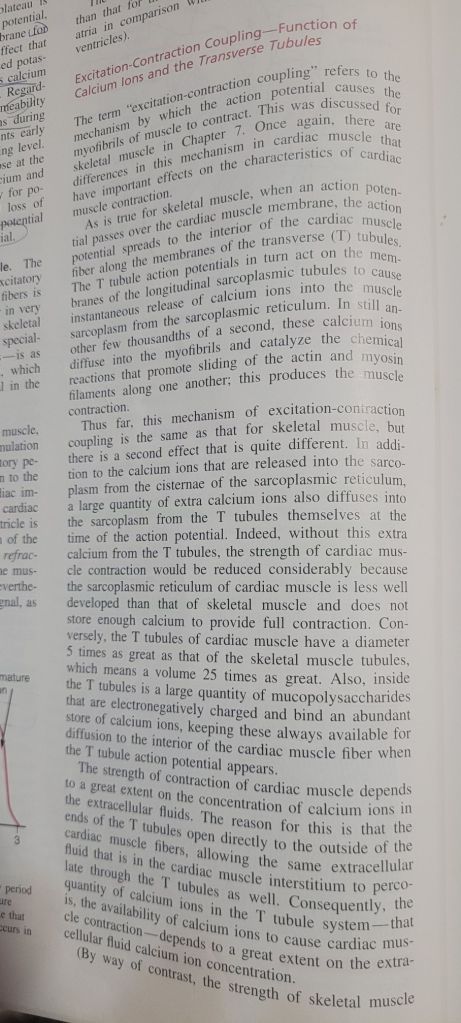
Excitation–contraction coupling = process where an electrical signal causes muscle contraction.
In cardiac muscle, an action potential travels along the cell membrane.
The action potential enters the cell through T-tubules.
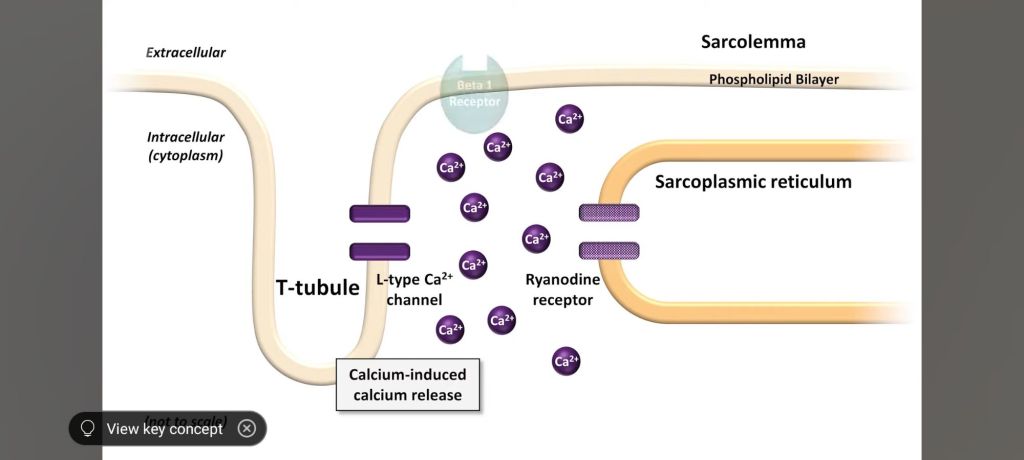
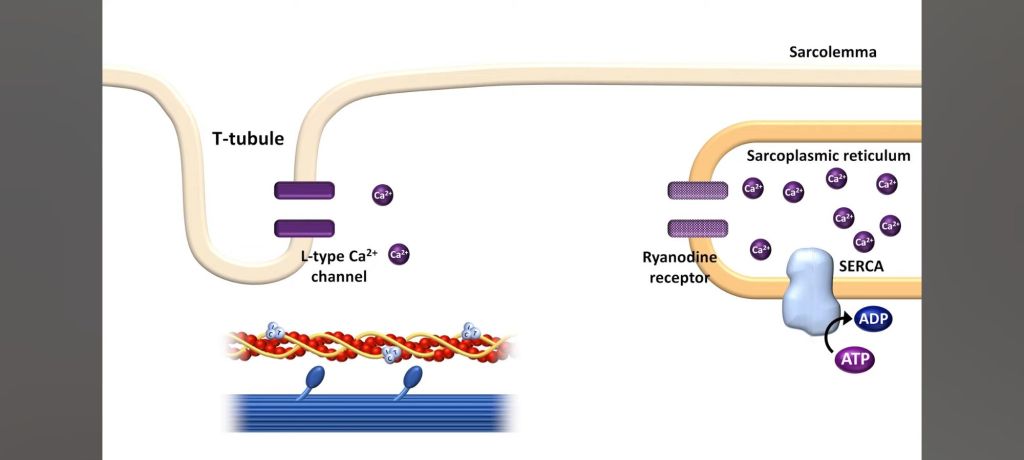
T-tubule activation triggers the sarcoplasmic reticulum (SR) to release calcium (Ca²⁺).
Released calcium diffuses into the muscle fibers (myofibrils).
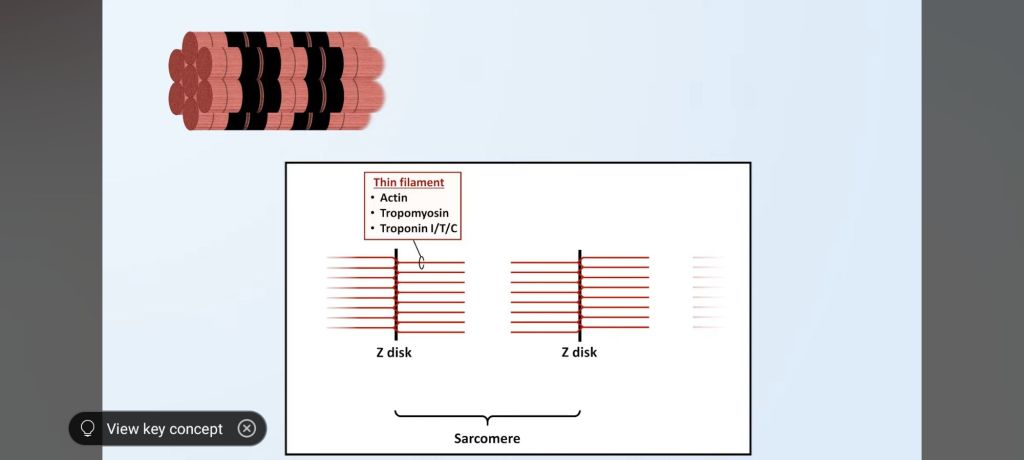
Calcium enables actin and myosin interaction.
Actin and myosin slide past each other.
This sliding produces cardiac muscle contraction.
Cardiac muscle differs from skeletal muscle because additional calcium enters from the T-tubules.
This extra calcium is necessary for a strong cardiac contraction.
The cardiac SR stores less calcium than skeletal muscle SR.
Therefore, cardiac muscle depends on extracellular calcium.
Cardiac T-tubules are about 5 times wider than skeletal muscle T-tubules.
Because of the larger diameter, cardiac T-tubules have about 25 times greater volume.
T-tubules contain negatively charged mucopolysaccharides that bind calcium.
Bound calcium serves as a readily available calcium reserve.
Cardiac T-tubules open directly to the extracellular fluid.
Extracellular calcium enters through the T-tubules during an action potential.
The strength of cardiac contraction depends greatly on extracellular calcium concentration.
Lower extracellular calcium → weaker heart contraction.





 DrMKZ
DrMKZ 
Leave a comment